
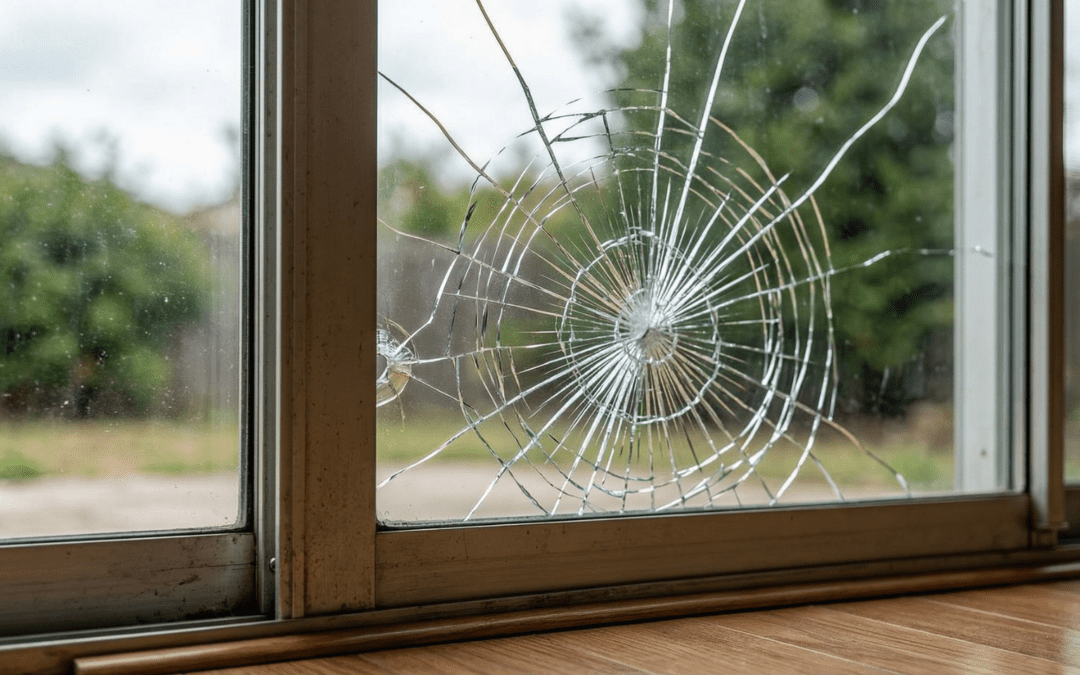
There is a cracked window in your house right now. Or a chip in a door panel. Or a seal that failed six months ago. And you have been meaning to get it fixed, but it is not urgent. It still closes. It still keeps the rain out (mostly). It is on the list, just not at the top.
We get it. Glass replacement does not feel urgent the way a leaking roof or a broken hot water system does. But here is what we have learned after years of replacing glass across Wollongong, Sydney, and the Illawarra: the “it is fine for now” approach almost always costs more in the end.
Not a little more. Significantly more.
The Real Cost of Waiting
When homeowners delay glass replacement, the damage rarely stays the same. It gets worse. And worse means more expensive.
Cracks Spread
A small crack in a window or door panel is not stable. Glass is under constant stress from temperature changes, wind pressure, and the weight of the panel itself. A 10cm crack in winter can become a 40cm crack by summer, or it can spider-web across the entire pane after a strong gust of wind.
Once a crack reaches the edge of the glass, the panel loses most of its structural strength. At that point, the risk of the panel shattering increases dramatically, especially in areas of your home where people walk past or lean against glass.
A crack that could have been a simple panel replacement becomes an emergency callout. Emergency callouts cost more than scheduled jobs. Always.
Failed Seals Get Worse
If you have double glazed windows and you notice fogging or condensation between the panes, the seal has failed. Moisture is getting into the gap where it should not be.
This does not fix itself. The moisture inside the unit causes mineral deposits to build up on the inner glass surfaces over time. After a few months, those deposits etch into the glass permanently. At that point, even replacing the seal will not fix the cloudy appearance because the glass itself is damaged.
Catching a failed seal early means you can replace just the IGU (the glass unit) without touching the frame. Waiting too long can mean replacing the frame as well, which doubles or triples the cost.
Energy Loss Adds Up Quietly
A cracked or poorly sealed window is an energy leak. Cold air gets in during winter. Cool air escapes during summer. Your heater or air conditioner runs longer to compensate, and your energy bill creeps up by a few dollars each quarter.
It does not feel like much in any single bill. But over 12 to 18 months of delay, the cumulative energy cost can add up to a significant portion of what the replacement would have cost in the first place.
Insurance Gets Complicated
Here is something most homeowners do not think about until it is too late: if a known issue with your glass leads to further damage or injury, your insurer may push back on the claim.
For example, if you know a sliding door panel is cracked and you do not replace it, and then it shatters during a storm causing water damage to your flooring and furniture, the insurer could argue that the damage was preventable. The same applies if a child or pet is injured by glass that was already compromised.
We are not insurance advisors, and every policy is different. But the principle is simple: a known, unrepaired fault weakens your position when you need to make a claim.
The Safety Problem No One Talks About
This is the part of the conversation that matters most, and the one that most people push to the back of their mind.
Australian Standards exist for a reason. AS 1288 and AS/NZS 2208 specify which types of glass must be used in different locations around your home. Any glass in a “human impact area” (within 500mm of a door, below 800mm from the floor, in a wet area, or in a balustrade) must be safety glass: either toughened or laminated.
If your home has older glass that does not meet these standards, it is not just non-compliant. It is dangerous. Standard float glass breaks into large, sharp shards that can cause serious cuts. Toughened glass breaks into small, blunt pieces. Laminated glass holds together even when cracked.
We regularly find non-compliant glass in homes built before the mid-1990s, when the standards were less strict. If you are living with old, non-compliant glass in a doorway or a low window, every day you wait is a day that risk sits in your home.
“But It Is Just a Small Chip”
Small chips in glass are deceptive. They look harmless, but they create a stress point in the panel. Temperature changes cause glass to expand and contract slightly. Each cycle puts stress on the chip, and eventually, the chip becomes a crack.
In toughened glass, a chip is even more serious. Toughened glass is under high internal tension by design (that is what makes it break into small, safe pieces). A chip in toughened glass can cause the entire panel to shatter without warning. There is no gradual cracking. It goes from “looks fine” to “glass everywhere” in an instant.
If you have a chip in a toughened glass panel, particularly in a door, a shopfront, or a shower screen, do not wait. Get it assessed.
What “Replacing Too Late” Actually Looks Like
Here are real scenarios we see regularly:
The sliding door that became an emergency. A homeowner notices a hairline crack in their sliding door in March. They plan to get it fixed after Easter. In May, a cold snap causes the crack to spread. By June, the panel shatters while the family is home. Emergency callout, board-up, then replacement. Total cost: roughly double what a scheduled replacement would have been.
The bathroom window that caused a renovation. A cracked obscure glass panel in a bathroom is left for over a year. Moisture gets through the crack and into the timber frame. By the time the glass is replaced, the frame is rotted and needs rebuilding. A $300 glass job becomes a $1,500 frame-and-glass job.
The shopfront that cost a sale. A retail shop owner puts off replacing a scratched and chipped shopfront panel because it “still works.” A potential customer later tells them the shop looked closed or run-down from the outside. The cost of the lost foot traffic is impossible to measure, but the shopfront replacement itself would have been a straightforward job.
How to Know When It Is Time
You do not need to be a glazier to know when glass needs replacing. Here are the signs:
Visible cracks or chips. Any crack, no matter how small, should be assessed. Chips in toughened glass are urgent.
Condensation between panes. If you have double glazing and you see moisture between the glass, the seal has failed.
Difficulty opening or closing. If a window or door is sticking, the frame may have shifted, putting stress on the glass.
Drafts near windows. If you can feel air movement near a closed window, the seal or the glass is compromised.
Non-compliant glass in high-risk areas. If your home was built before the mid-1990s and you have not upgraded the glass in doorways, wet areas, or low windows, it is worth getting a professional assessment.
Stop the Meter Running
The longer you wait, the more the final bill grows. What starts as a simple glass replacement becomes an emergency callout, a frame repair, a water damage claim, or worse.
If you have glass that needs attention, even if it feels like it can wait, the smartest move is to get it quoted now and schedule it at a time that suits you. That way, you control the cost, the timing, and the outcome.
Book a Glass Assessment
If you have a cracked window, a foggy double glazed unit, or glass you suspect might not meet current safety standards, contact our team for an honest assessment. We service homes and businesses across Wollongong, Sydney, the Illawarra, and the Southern Highlands.
Recent Comments