
This is one of the most searched pet door questions in Australia, and the answer is simpler than most websites make it sound.
Yes, you can install a dog door (or cat door) in a sliding glass door. It is one of the most common pet door installations we do. But the method matters, and getting it wrong can cost you a glass panel, a warranty, or your rental bond.
Here is how it works, what your options are, and what to watch out for whether you own or rent.
The short answer: yes. We replace your sliding door’s glass panel with a new toughened panel that has the pet door hole cut at the factory, then fit the flap on site. The door looks and slides the same, and the job takes about one to two hours. Renters need the landlord’s written permission first, and the original panel can be swapped back in when they move out. Call 0424 154 448 for a quote.
How Pet Doors in Sliding Glass Work
There are two main approaches to installing a pet door in a sliding glass door. One is the right way. The other is a shortcut that creates problems.
Option 1: Full Panel Replacement (the Right Way)
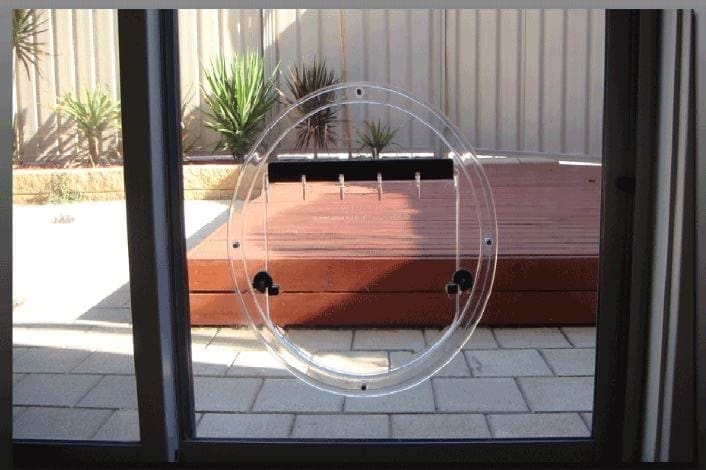
This is the standard professional method. Your existing glass panel is removed from the sliding door frame and replaced with a new panel of toughened glass that has a hole pre-cut for the pet door.
The hole is cut at the glass factory before the toughening process. This is the only way to cut a hole in toughened glass. Once glass is tempered, it cannot be drilled, cut, or modified without shattering.
The new panel slides into the existing frame exactly like the old one. The pet door flap is fitted on site. When the job is done, your sliding door looks and functions the same as before, with the addition of a pet door at the correct height for your dog or cat.
This method uses toughened safety glass that meets AS/NZS 2208, which is the Australian Standard for safety glazing. The installation is compliant, the glass is safe, and the door operates normally.
Option 2: Insert Panel (the Shortcut)
Some pet door brands sell an “insert panel” that sits in the sliding door track. You slide your glass door open partway, place the insert panel in the gap, and the pet door flap is built into the insert.
This approach does not require any glass cutting. It is cheaper and technically reversible. But it comes with significant trade-offs:
Security. The insert panel reduces the usable width of your door opening. More importantly, the connection between the insert panel and the glass door is a weak point. A determined intruder can pop the insert out of the track far more easily than they can break through a solid glass panel.
Insulation. Insert panels are usually made of acrylic or thin aluminium with a plastic flap. They do not insulate anywhere near as well as a toughened glass panel. You will notice more drafts and temperature transfer, especially in winter.
Appearance. Insert panels look like what they are: an aftermarket addition wedged into the door track. They do not sit flush, they collect dirt in the track channel, and they reduce the visual opening of the door.
Stability. Insert panels can rattle in the track during wind. Some models require a security bar or clamp to hold them in place, which adds another component that can fail.
For renters looking for a temporary, low-cost solution, an insert panel can work as a short-term fix. But for homeowners investing in a permanent pet door, panel replacement is the better option in every measurable way.
What About Fixed Glass Panels?
Many sliding door systems have two panels: one that slides and one that is fixed in place. You can install a pet door in either panel.
The fixed panel is often the better choice if your pet’s access point is on that side of the door. Because the panel does not move, there is no wear on rollers or tracks from the additional weight of the pet door hardware. The installation process is the same: the fixed panel is removed, a new pre-cut toughened panel goes in, and the pet door is fitted.
Some homeowners prefer to put the pet door in the sliding panel so the fixed panel remains untouched. This works too, but keep in mind that the sliding panel is the one that takes the most mechanical stress over its lifetime. Adding a pet door does not weaken the glass, but if the rollers or track need replacement down the line, the panel with the pet door will need to be removed and refitted.
What About Stacker Doors?
Stacker doors (where multiple panels slide and stack behind each other) can accept pet doors, but the installation is more involved. Each panel in a stacker system is typically narrower than a standard sliding door panel, which limits the pet door size you can fit.
The key consideration with stackers is whether the panel you choose for the pet door is one that stays in a fixed position when the door is closed. You do not want the pet door panel buried behind other panels where your dog cannot reach it.
Talk to your glazier about the best panel position before ordering. The panel choice affects both usability for your pet and the manufacturing specifications for the glass.
Can Renters Install a Pet Door in Glass?
Yes, and this is one of the biggest advantages of glass-mounted pet doors over wall-mounted ones.
When you move out, the glass panel with the pet door can be swapped back to a standard glass panel. No holes in walls, no patching, no repainting. The original panel can even be stored during your tenancy and reinstalled when you leave, leaving no evidence that a pet door was ever there.
Here is what renters should do:
Get written permission from your landlord or property manager. This is a condition of most lease agreements for any modification to the property.
Keep the original glass panel. When the new panel with the pet door is installed, ask the glazier to leave the old panel with you. Store it safely. When your lease ends, a glazier can swap it back in.
Budget for two installations. You will pay for the initial pet door panel installation and then for the swap-back when you move out. Factor both costs into your decision. Even with two installations, this is usually cheaper than repairing a hole in a brick or timber wall to bond-return standard.
Check your pet door flap is lockable. Most landlords will want to know that the pet door can be locked closed for security when you are away or when showing the property.
Common Questions
Will a pet door weaken my sliding glass door?
No. The replacement panel is manufactured from toughened glass to the same thickness and safety standard as the original. The hole is engineered into the panel during manufacturing, not cut into it after the fact. The structural integrity of the panel is maintained.
Can I install a pet door in double glazed sliding glass?
Yes, but it is more complex and more expensive. The pet door must be integrated into one pane of the IGU (insulated glass unit), and the unit must be custom-manufactured. Not all pet door brands are compatible with double glazed panels. Talk to your glazier about options.
What size pet door can I fit in a standard sliding door panel?
A standard residential sliding door panel is typically 800mm to 900mm wide and 2,000mm to 2,100mm tall. This gives enough space for pet doors up to about 40cm wide and 55cm tall, which covers all but the very largest dog breeds. For sizing guidance by breed, check our sizing guide.
How long does the installation take?
A straightforward panel replacement with pet door installation takes about one to two hours on site. The glass panel is pre-manufactured before the appointment, so there is minimal disruption. Your sliding door will be operational the same day.
Get a Quote for Your Sliding Door
If you want a pet door installed in your sliding glass door, whether you own or rent, contact our team for a clear quote. We supply pet doors from Pettek, TransCat, Pet Doors Australia, and custom Australian pet door brands across Wollongong, Sydney, and the Illawarra.
Call 0424 154 448 for a quote, or read more about our dog doors in glass and cat doors in glass.
Recent Comments