
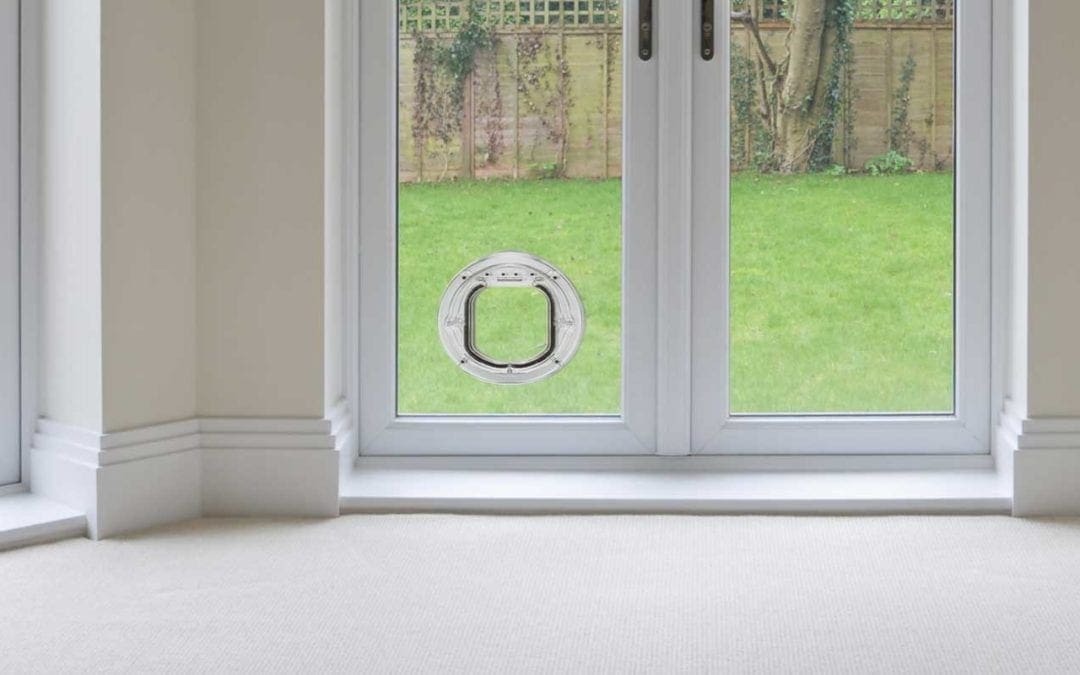
A pet door should make life easier. Your dog or cat gets their own access. You stop playing doorman. Everyone is happy.
But when a pet door is installed incorrectly, it can do more than just look bad or work poorly. It can void the warranty on your glass, leave your installation non-compliant with Australian Standards, and create safety risks that you will not notice until something goes wrong.
We see these mistakes regularly. Not from licensed glaziers, but from handymen, DIYers, and unlicensed installers who treat pet door installation like a simple hardware job. It is not. Any time you modify or replace a glass panel in your home, glazing safety standards apply.
Here are the five most common mistakes, and why each one can cost you far more than the installation itself.
Mistake 1: Cutting Into Existing Toughened Glass
This is the most serious mistake and, surprisingly, the most common one attempted by DIYers who watch online tutorials from overseas.
Toughened (tempered) glass cannot be cut, drilled, or modified after it has been tempered. It is manufactured under extreme heat and rapid cooling, which creates high internal tension across the entire panel. This tension is what makes toughened glass strong and what causes it to shatter into small, safe pieces when it breaks.
If you attempt to drill or cut into toughened glass, it does not cut cleanly. It explodes. The entire panel shatters instantly, often violently enough to send fragments across the room.
The correct process is to remove the existing toughened panel and replace it with a new panel that has the pet door opening pre-cut before tempering. The hole is cut into the raw glass at the factory, and then the panel is toughened with the opening already in place.
Anyone who tells you they can “just cut a hole” in your existing glass is either uninformed or working with float glass that may not meet safety standards for its location.
Warranty impact: Attempting to modify toughened glass destroys it. There is no warranty claim for self-inflicted shattering. You will pay for both the destroyed panel and its replacement.
Mistake 2: Using Non-Safety Glass
Every glass panel in a door (sliding, hinged, or fixed) is classified as a “human impact area” under Australian Standard AS 1288. This means it must be safety glass: either toughened or laminated.
When a handyman or unlicensed installer replaces a glass panel for a pet door, they sometimes source the cheapest glass available without checking whether it meets the safety standard. Standard float glass (also called annealed glass) is not safety glass. It breaks into large, sharp shards that can cause serious injury.
You can identify safety glass by a small etched or printed mark in one corner of the panel. It will show the Australian Standards certification mark and the manufacturer’s details. If your glass panel has no stamp, it may not be safety glass.
Warranty impact: Glass that does not comply with AS/NZS 2208 is non-compliant from the moment it is installed. No legitimate manufacturer will warrant non-compliant glass. More importantly, if someone is injured by non-safety glass in a human impact area, the homeowner carries the liability.
Mistake 3: Incorrect Positioning of the Pet Door Opening
Where the hole sits in the glass panel matters for both your pet and the structural integrity of the glass.
The opening must be positioned far enough from the edges of the glass panel to maintain adequate structural margins. If the hole is too close to the edge, the glass is weakened at that point and is more likely to crack or shatter from normal use, wind pressure, or thermal stress.
Glass manufacturers specify minimum edge distances for holes and cutouts. These specifications vary depending on the panel size, glass thickness, and the size of the opening. A licensed glazier calculates these margins as part of the manufacturing order.
The vertical position also matters for your pet. The bottom of the pet door opening should sit at the right step-over height for your animal. Too high, and your pet strains to get through (especially older dogs with joint problems). Too low, and you lose the weather seal along the bottom of the panel.
Warranty impact: A pet door opening that does not meet the manufacturer’s edge distance requirements voids the glass warranty. If the glass fails due to stress at the opening, the claim will be rejected because the panel was manufactured outside of specification.
Mistake 4: Poor Flap Fitting and Sealing
The pet door flap is mounted into the pre-cut opening using hardware that creates a weather-tight seal between the flap frame and the glass. This sounds straightforward, but sloppy fitting is common.
The most frequent problems:
Over-tightening screws. The screws that clamp the flap frame to the glass must be tightened to the correct torque. Over-tightening puts point-load stress on the glass around the screw holes. In toughened glass, a concentrated stress point can trigger a spontaneous shatter, sometimes days or weeks after installation.
Missing or compressed seals. The rubber or silicone gasket between the flap frame and the glass prevents water ingress and rattling. If this gasket is missing, compressed unevenly, or the wrong size, water can seep between the flap frame and the glass. Over time, this causes mineral buildup, corrosion of the flap hardware, and potential frame damage.
Wrong flap size for the opening. If the pet door flap is not the exact model specified for the pre-cut opening, the fit will be loose or forced. Either way, the seal is compromised, and the door will rattle in wind, leak in rain, or both.
Warranty impact: Damage caused by incorrect flap installation (stress fractures from over-tightened screws, water damage from poor sealing) is classified as installation error, not a manufacturing defect. The glass warranty will not cover it.
Mistake 5: No Compliance Documentation
When a licensed glazier installs a glass panel with a pet door, they provide documentation confirming that the glass meets AS/NZS 2208 and that the installation complies with AS 1288. This documentation matters for three reasons:
Insurance claims. If the glass is damaged by a storm, break-in, or accident, your insurer may ask for proof that the glass was compliant at the time of installation. Without documentation, the claim can be disputed.
Property sale. When you sell your home, a building inspection may flag non-compliant glass. If you cannot prove that the pet door installation was done correctly with safety glass, you may need to replace it before settlement.
Warranty claims. If the glass fails prematurely (a manufacturing defect, a spontaneous shatter, a seal failure), you need the manufacturer’s warranty documentation to make a claim. No documentation means no claim.
Handymen and unlicensed installers typically do not provide compliance documentation because they are not qualified to certify that the installation meets Australian Standards. Some may not even be aware that the standards apply.
Warranty impact: Without documentation, you have no proof of compliance and no pathway to make a warranty claim, even if the glass is genuinely defective.
How to Protect Yourself
The simplest way to avoid all five of these mistakes is to use a licensed glazier who is a member of an industry body like AGGWA (Australian Glass and Glazing Association, Western Australia chapter) or the equivalent in your state.
A licensed glazier will:
- Remove the existing panel safely
- Order a new toughened panel with the pet door opening pre-cut to specification
- Position the opening at the correct height for your pet and within the structural margin requirements
- Fit the pet door flap to the manufacturer’s instructions with the correct torque and sealing
- Provide documentation confirming compliance with AS 1288 and AS/NZS 2208
This is not a premium, optional service. This is the baseline standard for any glass modification in a residential property. Anything less puts your warranty, your compliance, and your family’s safety at risk.
Get It Done Right
If you are considering a pet door installation and want it done properly with full compliance, talk to our team. We are licensed glaziers and AGGWA members servicing Wollongong, Sydney, the Illawarra, and the Southern Highlands. Every pet door we install comes with compliant glass and proper documentation.
Recent Comments