
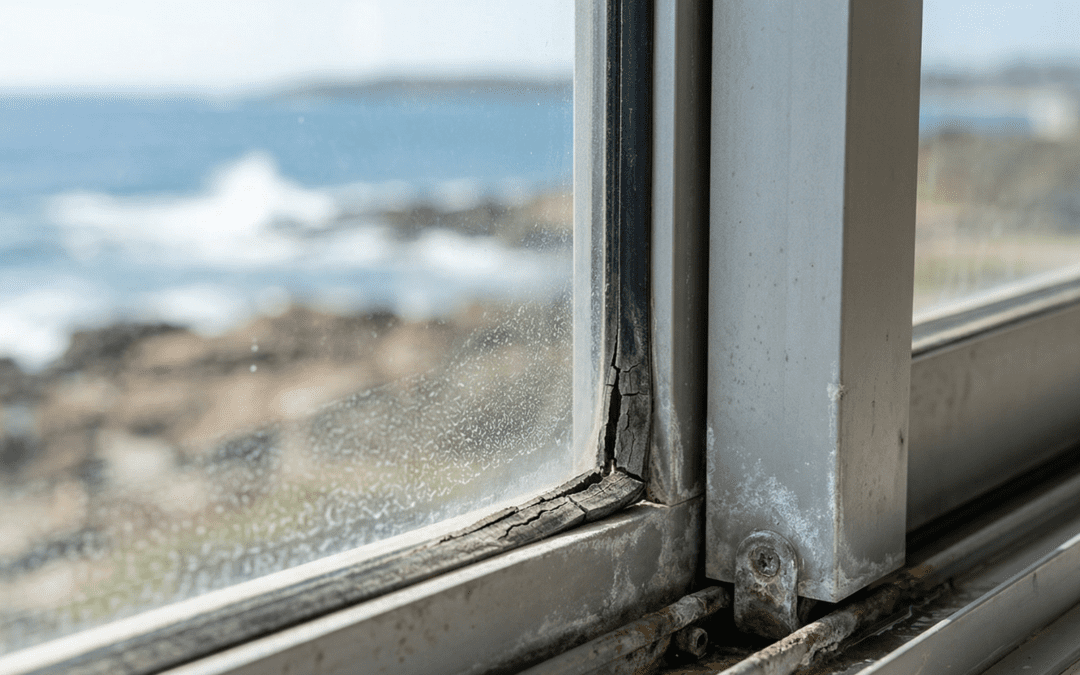
If you live within a few kilometres of the coast in the Illawarra, you already know what salt air does to metal. Gate hinges rust. Car paint fades faster. Outdoor furniture corrodes in a single season. But most homeowners do not realise that salt air also damages glass, and the parts around it.
The glass itself is more resistant than most people think. But the seals, frames, hardware, and coatings that hold everything together are not. And when those components fail, the glass follows.
Understanding how coastal conditions affect your windows and doors can save you thousands in premature replacements and help you make smarter choices when it is time to upgrade.
What Salt Air Actually Does
Salt-laden air is carried inland by prevailing winds off the ocean. The further you are from the waterline, the less concentrated the salt exposure. But in suburbs like Wollongong, Thirroul, Austinmer, Port Kembla, Shellharbour, and Cronulla, the salt load is high enough to accelerate wear on building materials year-round.
The Australian Standard for corrosion zones (AS 4312) classifies coastal areas into categories based on distance from the ocean. Homes within 1km of the coast in the Illawarra typically fall into a “severe” or “very severe” marine environment. This classification affects what materials builders should use for window frames, hardware, and fixings.
Here is what happens to each component:
Glass Surface
Glass is chemically stable and resists salt well in the short term. However, salt deposits on glass surfaces can cause micro-etching over time if not cleaned regularly. You may notice a hazy, slightly rough texture on windows that face the ocean. This is salt residue bonding to the glass surface.
Once etching occurs, no amount of cleaning will restore clarity. The glass surface is permanently marked. Regular washing with fresh water (even just a hose-down every few weeks) prevents this buildup from becoming permanent.
Window Seals and Gaskets
This is where the real damage happens. The rubber gaskets and silicone seals that hold glass panels in their frames degrade faster in salty, UV-heavy environments. Salt draws moisture into the seal material, which causes it to swell, shrink, crack, and eventually fail.
When a seal fails, water gets between the glass and the frame. In double glazed units, a failed edge seal allows moisture into the air gap, causing the permanent fogging effect that many coastal homeowners recognise. Once the seal fails on an IGU, the entire unit needs replacing.
Aluminium Frames
Aluminium is naturally corrosion-resistant because it forms a protective oxide layer on its surface. But in severe marine environments, this layer can break down. You will see it as white, powdery corrosion (called “white rust”) on unpainted aluminium frames, particularly in corners and along the bottom rail where water pools.
Anodised aluminium performs better than raw aluminium in coastal conditions. Powder-coated aluminium performs better again, as long as the coating is intact. If the powder coating is chipped or scratched, corrosion starts at the exposed point and works its way under the coating.
Hardware and Fixings
Locks, handles, rollers, and screws are often the first casualties of salt air. Standard zinc-plated hardware corrodes quickly near the coast. Stainless steel (grade 316, not 304) is the appropriate choice for severe marine environments, but many builders and window suppliers install cheaper hardware that is not rated for coastal use.
Corroded rollers on sliding doors cause the door to jam or stick. Corroded lock mechanisms fail. Corroded screws lose their grip. All of these put stress on the glass panel and can lead to premature glass replacement even when the glass itself is fine.
How This Affects Your Glass Replacement Decisions
When it is time to replace glass in a coastal home, the smart approach goes beyond just swapping the panel. Here is what to consider:
Specify Marine-Grade Hardware
If your glazier is replacing a sliding door panel or a window in a coastal property, ask about the hardware. Grade 316 stainless steel rollers, tracks, and fixings cost more upfront but last significantly longer than standard hardware in a salt environment. Replacing glass and then having the new hardware fail in two years is a waste.
Choose the Right Frame Treatment
If the existing frame shows signs of corrosion, address it during the glass replacement. Cleaning the corrosion, treating the aluminium, and resealing the frame before installing new glass extends the life of the entire assembly. Putting new glass into a corroded frame is a short-term fix.
Consider Coating Options
Low-E coatings and tinted glass are often discussed for their energy benefits, but some coatings also provide a harder, smoother surface that resists salt adhesion better than standard float glass. Ask your glazier about coated glass options if your windows face the ocean or prevailing wind.
Clean Glass Regularly
This sounds basic, but it is the single most effective thing coastal homeowners can do to extend the life of their glass. A regular rinse with fresh water (weekly if you are close to the ocean, fortnightly further back) removes salt before it has a chance to etch the surface or degrade seals.
You do not need special products. A garden hose is enough for maintenance washing. For built-up salt deposits, warm water with a small amount of mild detergent and a soft cloth works well. Avoid abrasive cleaners or scourers, which will scratch the glass and accelerate future salt adhesion.
Coastal vs Inland: Does It Really Make That Much Difference?
In a word, yes.
We service properties from Sydney down through the Illawarra and into the Southern Highlands around Bowral. The difference in glass and hardware condition between a home in Austinmer and a home in Bowral (just 60km apart) is dramatic.
A sliding door in Bowral with standard hardware might last 15 to 20 years without issues. The same sliding door with the same hardware in Austinmer might show corrosion in 5 to 7 years and need full replacement in 10.
This does not mean coastal homes are at a disadvantage. It means they need the right materials specified from the start. When a residential glass replacement is done with the coastal environment in mind, using marine-grade hardware, properly sealed frames, and quality glass, the installation will perform well for years.
What to Look for in Your Home Right Now
If you live in a coastal suburb, here is a quick check you can do today:
Window seals. Run your finger along the rubber gaskets around your windows. If they feel brittle, cracked, or are pulling away from the frame, they need replacing.
Frame corners. Look at the bottom corners of your window and door frames. White powdery residue is aluminium corrosion.
Double glazed units. If you see fogging, condensation, or cloudiness between the panes of a double glazed window, the edge seal has failed.
Sliding door rollers. If your sliding door is harder to open than it used to be, or makes a grinding noise, the rollers are likely corroded.
Hardware. Check your window locks and handles. If they are stiff, discoloured, or leave residue on your hands, corrosion is underway.
Any of these signs is worth getting assessed before a small issue turns into an expensive one.
Get Your Coastal Glass Assessed
If you live in the Illawarra, Wollongong, or Sydney’s coastal suburbs and your windows or doors are showing signs of salt damage, get in touch with our team. We will assess the condition of your glass, frames, and hardware and give you a clear recommendation on what needs attention now and what can wait.
Recent Comments