
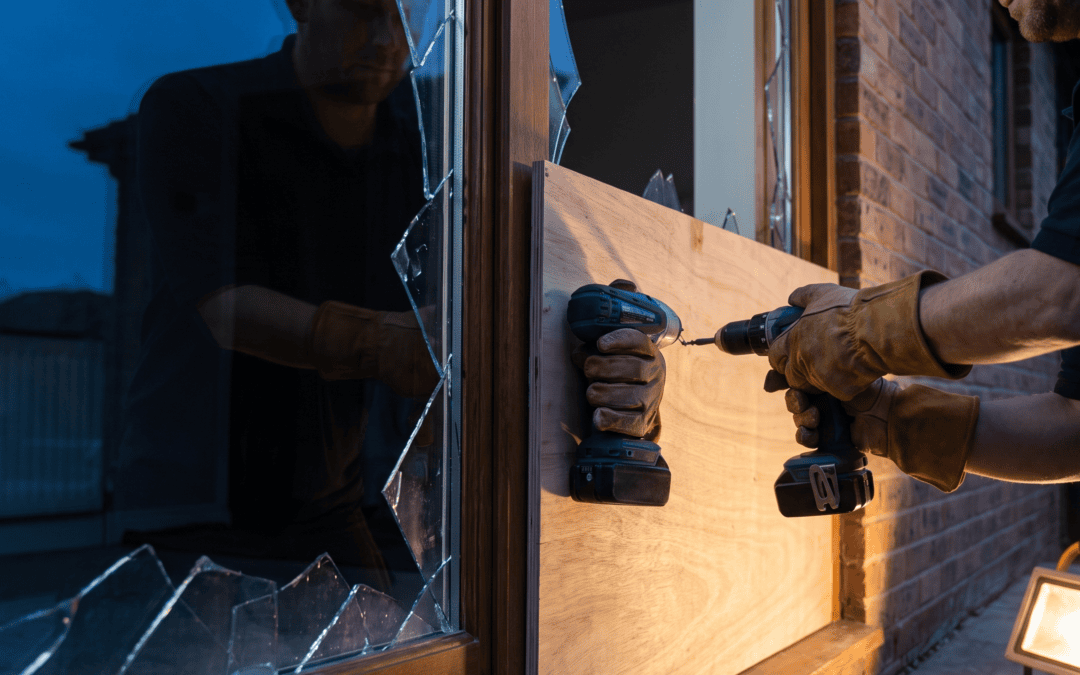
Your window is smashed. Glass is on the floor. The house feels exposed. Your heart is pounding, and you are trying to figure out what to do first.
This is not the moment for a long article. So here is the short version up front: check everyone is safe, call the police, do not touch the glass, and call a glazier for a board-up. Everything else can wait.
Now here is the longer version, step by step, for when the adrenaline settles and you need to work through the process properly.
Step 1: Confirm Everyone Is Safe (Minutes 0 to 2)
Before you do anything with the glass, check that everyone in the house is accounted for and uninjured. This includes children, pets, and anyone who might have been near the broken window or door.
If someone has been cut by glass, apply pressure with a clean cloth and call 000 if the cut is deep, bleeding heavily, or on the face, hands, or feet. Glass lacerations can be more serious than they appear because the cuts are often clean and deep.
If the break-in happened while you were away and you have just arrived home, do not enter the property until you are confident the intruder is gone. Call the police from outside and wait for them to clear the building.
Step 2: Call the Police (Minutes 2 to 5)
Report the break-in to NSW Police. You can call the Police Assistance Line on 131 444 for non-emergencies, or 000 if the break-in is in progress or you believe the intruder may still be nearby.
The police will provide you with an event number (also called a reference number or COPS event number). Write this down or save it in your phone. You will need it for your insurance claim.
Even if nothing was stolen and the only damage is the glass, report it. A police report strengthens your insurance claim and creates a record that can help if there are repeat incidents in the area.
Step 3: Do Not Touch the Glass (Minutes 5 to 10)
Broken glass is dangerous to handle, especially in the dark or when you are stressed. Large shards of float glass have razor-sharp edges. Toughened glass fragments (small, blunt pieces) can still cut if you grab a handful or kneel on them.
Do not try to pick up glass with your bare hands. Do not vacuum it up yet. Do not sweep it toward the broken opening where it could fall on someone outside.
If the glass is on a surface where someone might walk (a hallway, a kitchen floor, a path outside), lay a towel, blanket, or sheet over the area to prevent foot injuries until you can clean it up properly with thick gloves and a broom.
Keep children and pets away from the area entirely. Close doors to the affected room if possible.
Step 4: Secure the Opening Temporarily (Minutes 10 to 20)
The broken window or door needs to be covered to secure the property and keep weather out. What you use depends on what you have available:
Plywood or MDF. If you have a sheet in the garage, this is the best temporary cover. Cut or position it to cover the entire opening and fix it in place with screws into the frame. This provides reasonable security and weather protection.
Heavy-duty cardboard. A flattened moving box or appliance carton can cover a window opening temporarily. Tape it firmly to the frame on all sides with packing tape or duct tape. This keeps wind and rain out but provides no security.
Plastic sheeting or tarp. For larger openings (sliding doors, shopfronts), a tarp or heavy plastic sheet taped and weighted down will block wind and rain. It will not stop an intruder, so this is only suitable if you are staying at the property.
A towel or blanket. For very small windows, a thick towel taped over the opening works as an overnight stopgap.
None of these are long-term solutions. They buy you time until a glazier can install a proper temporary board or replace the glass.
Step 5: Call a Glazier for Emergency Board-Up (Minutes 15 to 25)
Most emergency glaziers in the Wollongong, Sydney, and Illawarra area offer a board-up service. This involves a glazier attending your property (often within a few hours, even after-hours) and installing a secure temporary board over the broken opening.
A professional board-up is more secure than a DIY cover. The glazier uses plywood or polycarbonate sheeting fixed firmly to the frame or wall, providing a barrier that resists wind, rain, and opportunistic re-entry.
When you call, have the following information ready:
- Your address
- Which window or door is broken (front, back, side; ground floor or upper level)
- The approximate size of the opening
- Whether the glass is still partially in the frame or completely gone
- Whether you can see what type of glass it was (toughened fragments = small pieces; float glass = large shards)
- Your police event number (if you have it already)
The board-up is a separate service from the glass replacement. The glazier will measure the opening during the board-up visit and order the replacement glass, which typically takes 3 to 7 business days to manufacture.
Step 6: Document the Damage (Minutes 20 to 30)
Before the board goes up, photograph everything:
The broken window from outside. Capture the full opening, the frame, and the surrounding area. If there are marks on the frame (tool marks, pry marks, impact points), photograph those.
The broken window from inside. Show the glass on the floor, any damage to window coverings (blinds, curtains), and any damage to nearby furniture or walls from the impact.
Close-ups of the damage. The point of impact on the glass, the type of fragments (large shards or small pieces), and any items used to break the glass if they are still at the scene (rocks, bricks, tools).
The wider scene. If other parts of the property were disturbed (drawers opened, items moved, other damage), photograph those as well. Your insurer will want to see the full picture.
Any stolen or damaged items. If anything was taken or damaged during the break-in, photograph the empty space or the damaged item and make a written list.
These photos support your insurance claim and your police report. Take more than you think you need. You can always delete extras later, but you cannot go back and photograph damage after it has been repaired.
After the First 30 Minutes
Once the property is secured and documented, the immediate crisis is over. The next steps happen over the following days:
Contact Your Insurer
Call your home and contents insurer and report the incident. Have your policy number, your police event number, and your photos ready.
Key questions to ask your insurer:
- Is broken glass covered under my policy? (Most comprehensive home policies include glass breakage.)
- What is the excess (deductible) for glass breakage?
- Do I need to use a preferred glazier, or can I choose my own?
- What documentation do you need from me to process the claim?
Some policies have a separate glass breakage section with its own excess amount. If the cost of replacement is close to the excess, it may not be worth claiming, especially if a claim affects your future premium.
Schedule the Glass Replacement
Your glazier will have measured during the board-up visit or will return to measure once the glass type and specifications are confirmed. Replacement glass is manufactured to order (toughened safety glass cannot be kept in stock in every size), so there is a manufacturing lead time.
For standard window and door panels, expect 3 to 7 business days from measurement to installation. For non-standard sizes, tinted glass, or double glazed units, allow 7 to 14 business days.
Review Your Security
A break-in is a good prompt to review your home security. Consider:
- Are all windows and doors fitted with working locks?
- Is the glass in your doors and low windows safety glass (toughened or laminated)?
- Would security film, laminated glass, or security screens reduce the risk of a repeat incident?
- Are exterior lights, sensor lights, or cameras appropriate for your property?
Your glazier can advise on security glass options if you want to upgrade the replacement panel. Laminated glass, for example, holds together when broken, which significantly delays forced entry compared to toughened glass (which shatters out of the frame when broken).
Clean Up Properly
Once the board is in place and the area is safe, clean up the glass carefully:
- Wear thick gloves (gardening gloves or leather work gloves, not latex or nitrile)
- Use a broom and dustpan for large pieces
- Use damp paper towels to pick up small fragments and slivers
- Vacuum the area thoroughly after sweeping, including under furniture and along skirting boards
- Check outdoor areas below the window for fallen glass
- Dispose of glass in a sturdy bag or box, not a standard garbage bag that can be punctured
A Note on Emotional Impact
Break-ins are unsettling. Even if nothing was stolen, the feeling that someone was in your home, that your family’s safe space was violated, takes time to process. It is normal to feel anxious, angry, or unsettled for days or weeks afterward.
If the break-in is affecting your sleep, your sense of safety at home, or your daily routine, talking to someone you trust can help. Your GP can also point you toward support if needed.
Getting the glass replaced quickly helps. A boarded-up window is a constant visual reminder of the break-in. A new, clean, secure panel closes that chapter and helps the house feel like home again.
Need Emergency Glass Help?
If your glass has been broken in a break-in, storm, or accident and you need a board-up or replacement, call our team or phone Brendan directly on 0424 154 448. We service Wollongong, Sydney, the Illawarra, and the Southern Highlands.
Recent Comments